



Game Development With RTX PRO Server
Centralized RTX PRO Server workflows boost game development with virtualized GPUs, AI integration, and scalable performance for global studio teams.
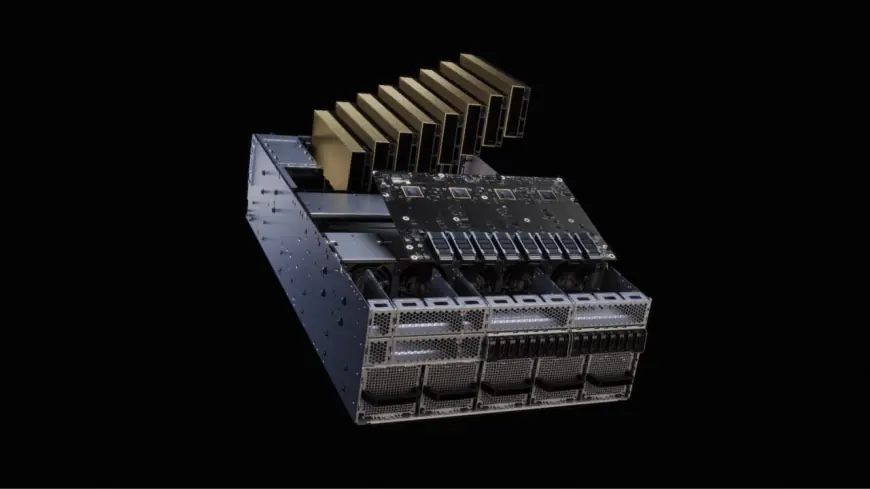


Game studios today are building larger worlds, managing increasingly complex pipelines, and coordinating across globally distributed teams. Yet many still depend on fixed, desk‑bound GPU workstations for critical production tasks — a model that struggles to keep pace with modern development demands.
At this year’s Game Developers Conference (GDC) in San Francisco, NVIDIA is introducing a new way forward: virtualized game development powered by the NVIDIA RTX PRO Server, built on NVIDIA RTX PRO 6000 Blackwell Server Edition GPUs and NVIDIA vGPU software. This approach unifies creative, engineering, AI, and QA workflows on a shared, high‑performance GPU platform hosted in the data center.
By centralizing GPU resources, studios can deliver the responsiveness and visual fidelity of workstation‑class systems while gaining the scalability, security, and operational consistency required for modern production.
Simplifying Complex Workflows
Centralizing GPU Infrastructure
As studios grow, hardware fragmentation becomes a major bottleneck. Workstations sit idle in one location while teams elsewhere wait for access. QA capacity is difficult to scale. Divergent drivers and tools make bugs harder to reproduce. AI workloads often run on isolated systems, adding even more operational overhead.
The NVIDIA RTX PRO Server shifts studios from workstation‑by‑workstation scaling to a centralized GPU infrastructure model. Teams can pool GPU resources, assign performance based on workload, and support parallel development, testing, and AI operations — all without expanding physical workstation footprints.
This shared infrastructure also enables dynamic scheduling: studios can run AI training, simulation, or automated game testing overnight, then reassign the same GPUs to interactive development during the day. The result is higher utilization and significantly reduced idle capacity.
Virtualized Workflows Across the Studio
The RTX PRO Server supports virtualized 3D graphics and AI workloads across the entire game development lifecycle:
- Artists — Virtual RTX workstations for traditional 3D content creation and generative AI workflows.
- Developers — Consistent, high‑performance engineering environments for coding and real‑time 3D development.
- AI researchers — Large‑memory GPU profiles for fine‑tuning, inference, and AI agent development.
- QA teams — Scalable validation and performance testing using the same Blackwell architecture found in GeForce RTX 50 Series GPUs.
With all teams — including remote sites and contractors — working on a unified GPU platform, studios reduce debugging friction and improve collaboration across the entire production pipeline.
Supporting AI and Engineering on Shared Infrastructure
AI and Graphics on One Platform
AI is now woven into every stage of game development: coding, asset creation, testing, simulation, and live operations. Supporting these workloads traditionally required separate infrastructure, creating silos and inefficiencies.
The RTX PRO Server eliminates this divide. Studios can run coding agents, internal model experiments, and AI‑assisted production workflows on the same platform used for graphics and engineering.
Key Capabilities
- 96GB of GPU memory on the RTX PRO 6000 Blackwell Server Edition GPU, enabling simultaneous real‑time graphics and large‑model inference.
- NVIDIA Multi‑Instance GPU (MIG) technology for partitioning a single GPU into isolated instances with dedicated compute, memory, and cache.
- NVIDIA vGPU software for secure, multi‑user access to GPU resources.
With combined MIG + vGPU configurations, a single RTX PRO 6000 Blackwell Server Edition GPU can support up to 48 concurrent users, maximizing utilization while maintaining performance isolation.
Enterprise‑Ready Deployment for Modern Studios
Built for Data‑Center Operations
RTX PRO Servers are built for enterprise‑grade data‑center environments. Studios can deploy virtual workstations using NVIDIA vGPU across supported hypervisors and remote‑workstation platforms, integrating seamlessly into existing IT practices.
Major game publishers already rely on NVIDIA vGPU technology to scale centralized development environments, improve resource efficiency, and streamline operations across global teams.
Reward this post with your reaction or TipDrop:
 Like
0
Like
0
 Dislike
0
Dislike
0
 Love
0
Love
0
 Funny
0
Funny
0
 TipDrop
0
TipDrop
0
 Sad
0
Sad
0
 Angry
0
Angry
0
NVIDIA pioneered accelerated computing to tackle challenges no one else can solve. Our work in AI and the metaverse is transforming the world's largest industries and profoundly impacting society.

















Comments (0)