



How Iran and the United States Became Locked in a 70‑Year Rivalry
Real Story: let's dive into how Iran and the United States went from early allies to decades of conflicts shaped by coups, revolution, war, and shifting global power.
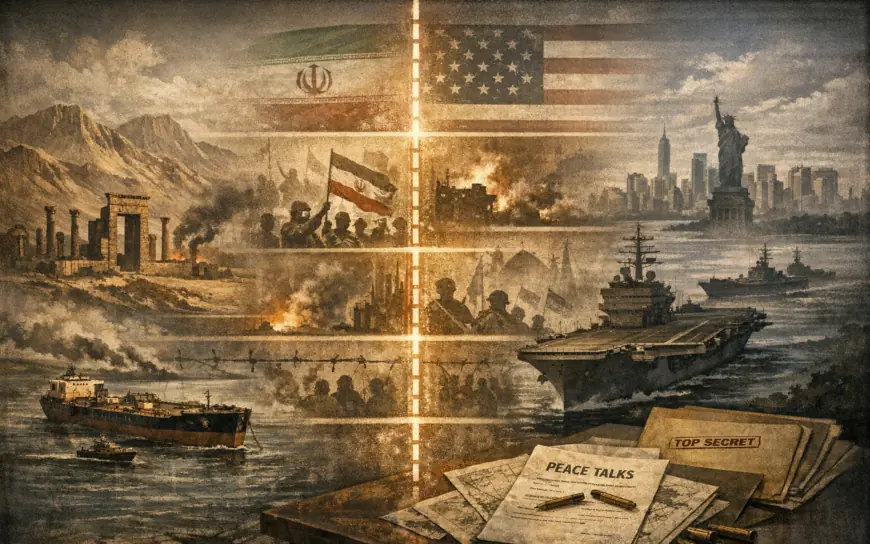
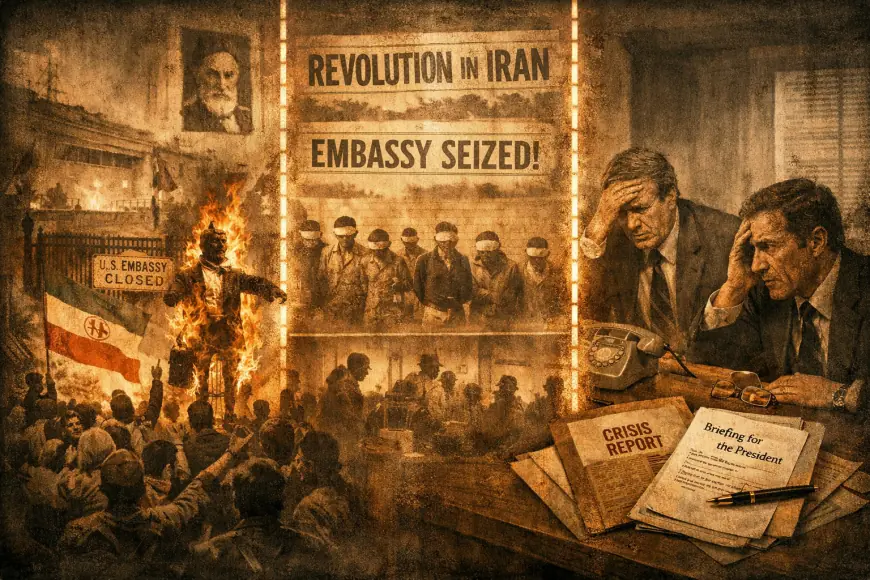


Let's dive into how Iran and the United States went from early allies to decades of conflicts shaped by coups, revolution, war, and shifting global power.
A Friendship Few Remember
There was a time—long before sanctions, warships, and nuclear negotiations—when Iran and the United States were not enemies at all. In the early 20th century, Iran (then Persia) saw America as a distant but friendly nation, unburdened by the colonial ambitions of Britain and Russia. American teachers opened schools in Tehran. American advisers helped modernize Iran’s finances. Travelers wrote about Persian hospitality; Iranians admired American innovation. It was a quiet friendship, the kind that rarely makes headlines. And like many quiet friendships, it was vulnerable to the storms of history.
The Coup That Rewrote the Story
In 1953, Iran’s elected Prime Minister Mohammad Mossadegh nationalized the country’s oil industry. For many Iranians, it was a moment of pride—an attempt to reclaim control over their own resources. For Western powers, it was a threat to economic and strategic interests. What followed became one of the most consequential turning points in modern Middle Eastern history: a covert operation that removed Mossadegh and restored the Shah to full power. The event reshaped Iranian politics and left a deep scar on the national memory.
To Washington, it was a strategic maneuver in the Cold War. To millions of Iranians, it was a betrayal—proof that foreign powers could decide their fate. This was the first fracture. It would not be the last.
The Shah’s Iran: Modernization and Unrest
For the next quarter‑century, the Shah ruled with strong support from the United States. Iran modernized rapidly—skyscrapers rose, universities expanded, oil wealth flowed—but political repression grew alongside the progress. The Shah’s secret police became notorious, and dissent was met with harsh consequences. By the late 1970s, Iran was a nation divided. The streets filled with protests. The monarchy trembled. And the world watched a revolution gather force.
1979: The Revolution That Changed Everything
In early 1979, the Shah fled Iran. Ayatollah Ruhollah Khomeini returned from exile to lead a sweeping revolution that replaced the monarchy with an Islamic Republic. The new leadership rejected the Shah’s Western alliances and framed the United States as a symbol of foreign domination. The revolution was not just political—it was emotional, cultural, and deeply personal for millions of Iranians. It was a reclamation of identity. And in that reclamation, the United States became the antagonist.
The Hostage Crisis: A Breaking Point
In November 1979, Iranian students stormed the U.S. Embassy in Tehran and took 52 Americans hostage. For 444 days, the crisis dominated global news. It was a moment of national trauma for the United States and a moment of revolutionary triumph for Iran’s new leadership. Diplomatic ties were severed. Sanctions began. And the relationship between the two nations entered a new era—one defined not by misunderstanding, but by open hostility.
The 1980s: War, Tragedy, and Escalation
The Iran–Iraq War erupted in 1980, one of the longest and deadliest conflicts of the century. The United States supported Iraq, deepening Iranian suspicion. In 1988, a U.S. Navy cruiser mistakenly shot down Iran Air Flight 655, killing 290 civilians. Washington called it a tragic error; Tehran called it an unforgivable act. These events hardened attitudes on both sides. The mistrust became structural, woven into policy, rhetoric, and national identity.
The Nuclear Era: Hope and Collapse
Through the 1990s and 2000s, Iran expanded its nuclear program. The United States expanded its sanctions. Each side believed the other was acting aggressively. Each step toward diplomacy was followed by setbacks. In 2015, a nuclear agreement briefly opened a window of hope. In 2018, that window closed again. The cycle of negotiation and confrontation continued, shaped by shifting leadership, regional conflicts, and global pressures.
The 2026 Conflict and the Battle Over Truth
By 2026, the U.S.–Iran rivalry had become tangled in decades of mistrust, proxy battles, and competing narratives. When coordinated strikes hit Iranian military and nuclear sites, the region was already on edge. Iran responded by announcing the closure of the Strait of Hormuz—a narrow passageway through which a significant share of the world’s oil moves.
Tankers stopped. Markets shook. Oil prices jumped. And millions of people far from the Gulf suddenly felt the ripple effects.
What happened next became a story not only of military escalation, but of information warfare. Governments issued statements. Analysts offered interpretations. Commentators argued over motives. In the noise, it became difficult for ordinary people to understand what was real and what was political theater.
Some voices argued the conflict was about global economic stability. Others believed it was about power, influence, or long‑standing grievances. Still others pointed to the long history of foreign involvement in the region’s oil and questioned whether any major power could ever be fully neutral in such a strategic zone.
What was clear—beyond any narrative—was the human reality: families worried, economies trembled, and a region already burdened by decades of conflict braced for more uncertainty.
The 2026 crisis didn’t emerge from a single decision or a single motive. It grew from layers of history, fear, pride, and competing versions of truth. In that sense, it reflected the deeper story of U.S.–Iran relations: a relationship shaped as much by memory and mistrust as by strategy or policy.
A Rivalry Without a Simple Ending
The U.S.–Iran relationship is not a story of heroes and villains. It is a story of:
- a coup that reshaped a nation’s destiny
- a revolution that reshaped a region
- a hostage crisis that reshaped public opinion
- a war that reshaped lives
- a nuclear standoff that reshaped diplomacy
- a 2026 conflict that reshaped global markets
It is a story of two nations that once saw each other as distant friends and now see each other through the lens of decades of mistrust. It is a story still being written.
*Share your story with us: Inspire, motivate, or educate others.
Follow. Like. Comment anonymously, no account required to comment here on Dfecho. And if you love this post and want to show your support, we’d appreciate your TipDrop—whether publicly in the comment section, or through our TipDrop Page. Thank You!

Reward this post with your reaction or TipDrop:
 Like
0
Like
0
 Dislike
0
Dislike
0
 Love
0
Love
0
 Funny
0
Funny
0
 TipDrop
0
TipDrop
0
 Sad
0
Sad
0
 Angry
0
Angry
0

Welcome to Real Story! Your global hub for real-world stories from all works of life: bold, motivational, money-making, funny, crazy, and formidable real-world stories. We celebrate the art of storytelling by curating and sharing remarkable real-world narratives and great opportunities from across the globe. Whether quirky, monumental, moneymaking, or inspiring, we highlight the best stories—no matter the source—and bring them to you. We write about and share captivating narratives from around the world, ensuring every story has a chance to be heard. *Follow us, comment, support us with TipDrop, request a quote, and let's serve you on a budget through Dfecho Free Quote Request service, or contact us to tell us your story.














Comments (0)