


Space Race Reignited: Bezos vs Musk in the Reusable Rocket Market
Discover how Jeff Bezos and Elon Musk reignite the Space Race in the battle for the reusable rocket market. Explore global competitors, economic impacts, and the future of space exploration.


For more than a decade, Elon Musk’s SpaceX has stood as the undisputed leader in reusable rocket technology, reshaping the economics of spaceflight and redefining humanity’s ambitions beyond Earth. Yet history is rarely written by one figure alone. On this day, Jeff Bezos and Blue Origin have stepped forward, proving themselves ready to contest the skies. The monopoly has ended; the rivalry for the reusable rocket market has begun.
The rise of reusability
Reusable rockets were once dismissed as science fiction. Musk’s Falcon 9 changed that narrative, demonstrating that boosters could return safely to Earth, be refurbished, and fly again. This breakthrough slashed launch costs, accelerated satellite deployment, and opened the door to commercial space ventures. SpaceX’s dominance was not only technological but cultural — Musk became the face of a new era in exploration, and the reusable rocket market became his domain.
Bezos enters the arena
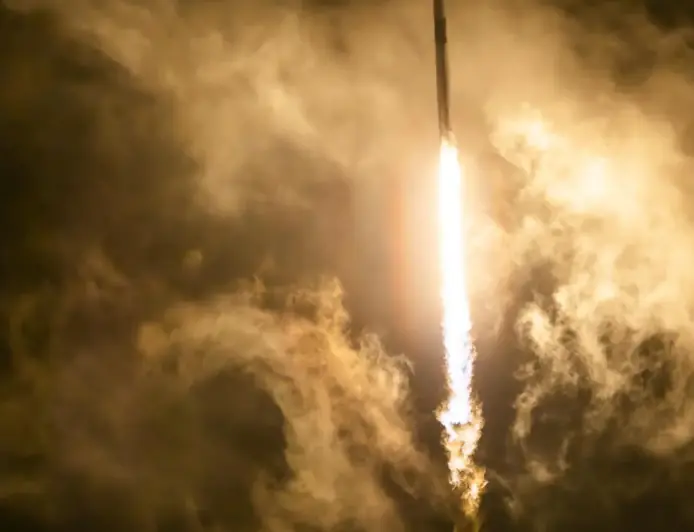
Jeff Bezos, founder of Amazon and visionary behind Blue Origin, pursued a slower, methodical path. While Musk raced ahead with rapid iteration, Bezos invested in long‑term infrastructure: engines, test flights, and gradual scaling. Blue Origin’s New Shepard proved suborbital reusability, while the much‑anticipated New Glenn rocket signaled readiness for orbital competition. Today’s milestone marks Bezos’s arrival as a serious contender, ending Musk’s solitary reign over the reusable rocket market.
Titans compared: Musk vs. Bezos
- Musk’s philosophy: Bold risk‑taking, rapid innovation, and a singular focus on colonizing Mars.
- Bezos’s philosophy: Patient development, long‑term sustainability, and a vision of orbital industry and lunar economies.
Their rivalry is more than personal; it represents two competing visions of humanity’s future in space. Yet at its core, the battle is about who controls the reusable rocket market — the gateway to affordable, repeatable access to orbit.
Economics of competition
Competition is the lifeblood of progress. With Bezos entering the reusable market, launch costs are expected to fall further, benefiting satellite operators, governments, and private companies. Space tourism, lunar exploration, and orbital manufacturing may all accelerate under the pressure of rivalry. Investors and nations alike now have alternatives, ensuring that innovation will not stagnate under a single monopoly.
Fact box: Global players in the reusable rocket market
Below is a snapshot of how different regions are positioning themselves in the reusable rocket race:
| Region | Key Players | Notable Developments |
|---|---|---|
| United States | SpaceX, Blue Origin, Rocket Lab, ULA | SpaceX dominates launches; Blue Origin’s New Glenn enters orbit; Rocket Lab testing reusable small launchers |
| Europe | Arianespace, ESA initiatives | Ariane 6 under pressure; ESA exploring reusability concepts |
| China | LandSpace, CALT, iSpace | Zhuque‑3 reusable rocket tests; government‑backed offshore recovery systems expected by 2026 |
| India | ISRO | Developing Reusable Launch Vehicle (RLV) prototypes |
| Japan | Mitsubishi Heavy Industries | Exploring reusability for future H3 rocket upgrades |
| Others | Emerging startups worldwide | Orbital hotels, lunar habitats, and reusable launch concepts in development |
Why this matters
- Market dominance: The Musk vs. Bezos rivalry is about who dominates the reusable rocket market in the United States.
- Global race: Worldwide, multiple players are racing to master reusability as the key to lowering costs and unlocking sustainable access to orbit.
- Strategic impact: The rivalry is not just personal — it’s part of a global contest to define the future of spaceflight.
Cultural and historical parallels
This moment echoes the Cold War space race, when the United States and Soviet Union vied for supremacy beyond Earth. Yet today’s contest is driven not by governments but by private enterprise. Two billionaires, wielding immense resources and ambition, are shaping humanity’s destiny in space. The symbolism is profound: exploration is no longer the domain of nations alone, but of individuals with visions vast enough to rival history itself. And unlike the original race, this one is defined by the reusable rocket market — the technology that makes space economically sustainable.
The road ahead
What lies beyond this turning point? Musk continues to push toward Mars, with Starship designed for interplanetary travel. Bezos eyes the Moon, orbital habitats, and industrial expansion beyond Earth. Their rivalry may eventually give way to collaboration, as humanity’s challenges in space demand shared solutions. But for now, the battle is set: two titans, one sky, and a reusable rocket market waiting to be claimed.
Conclusion
The day Musk met his match marks the beginning of a new chapter in space exploration. Bezos has proven himself ready for the contest, and humanity stands to benefit from the innovation born of rivalry. The Space Race is no longer a story of one man’s dominance, but of two visions colliding in the battle for the reusable rocket market. The age of monopoly is over — the age of competition has begun.
Reward this post with your reaction or TipDrop:
 Like
0
Like
0
 Dislike
0
Dislike
0
 Love
0
Love
0
 Funny
0
Funny
0
 TipDrop
0
TipDrop
0
 Sad
0
Sad
0
 Angry
0
Angry
0
Welcome to the Dfecho Space of Rose L. A tech visionary, investor, activist, mentor, believer, consultant, and strategist with a global perspective. Since founding my tech-enabled company in 2003, I have dedicated my career to pioneering responsible technology innovation and advocating for an inclusive, fair, and empowering digital economy for all. In 2025, I embarked on a new journey to promote and enable Local Tech Innovation as a sustainable solution to counter digital colonialism. Contact me: https://my.dfecho.com/ws/rosel in your own language; I am fluent in English, Dutch, and French, which enables me to connect and foster lasting relationships across cultures. Let’s explore mutually beneficial business and investment partnership opportunities to harness the power of people and cutting-edge technology in addressing social challenges sustainably.













Comments (0)