



Space research supports a new FDA-approved cancer therapy
Space research on the ISS enables FDA-approved cancer therapy, advancing drug delivery and medical innovation on Earth.
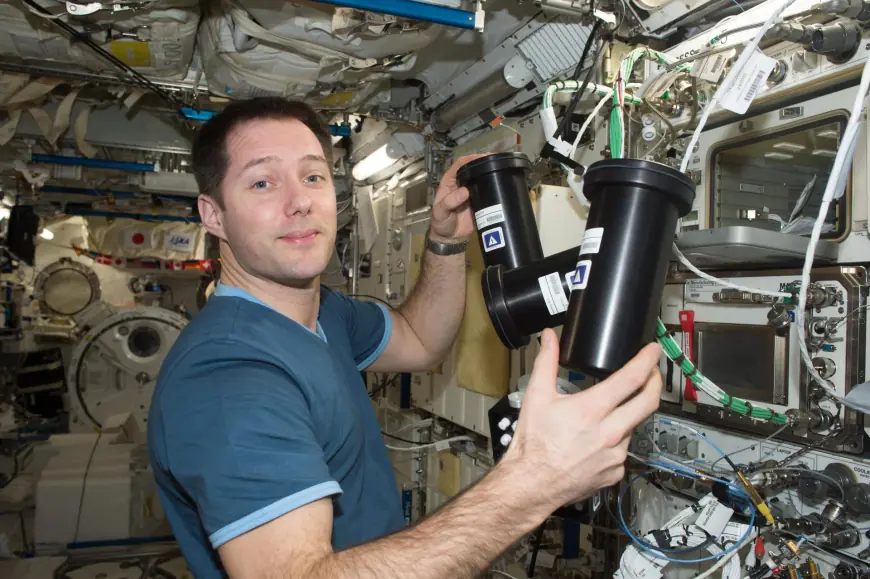


NASA’s International Space Station (ISS) has become a pivotal platform for private industry research, technology demonstrations, and medical advances, with roughly half of crew time dedicated to these efforts. This work tackles complex health challenges on Earth and helps prepare astronauts for future deep space missions.
Leveraging insights from ISS experiments, Merck Research Labs received U.S. Food and Drug Administration approval in September for a new subcutaneous injectable formulation of pembrolizumab (KEYTRUDA) used in several types of early-stage cancers. Research conducted via the ISS National Laboratory supported the development of this injectable version, enabling significantly shorter treatment times while preserving efficacy.
From infusions to fast injections
Pembrolizumab was traditionally administered by intravenous infusion during office visits, often taking up to two hours. Improvements later reduced infusion times to under 30 minutes every three weeks. The newly approved subcutaneous injection takes about one minute every three weeks, offering potential cost savings and a dramatic reduction in chair time for patients and healthcare providers.
Microgravity and crystal growth unlock drug delivery
Since 2014, Merck has conducted crystal growth experiments on the ISS to understand how crystals form, including those for the monoclonal antibody used in this therapy. In microgravity, physical forces of gravity are minimized, allowing the growth of larger, more uniform, high-quality crystals that inform medication development and structural modeling.
UV imaging comparing ground samples to space-grown crystals showed much more uniform size and distribution in microgravity. These results guided refinements in ground-based production of uniform crystalline suspensions, a key requirement for creating a stable, injectable formulation of KEYTRUDA.
Impact beyond one therapy
Research on the ISS continues to reveal how gravity influences crystallization, improving drug formulations and delivery systems. NASA and its partners advance a growing commercial economy in low Earth orbit while delivering benefits that improve life on Earth and support future human exploration of the Moon and Mars.
What is space research
Space research explores the unique conditions of low Earth orbit—especially microgravity—to study phenomena that are difficult or impossible to observe on Earth. By reducing gravitational effects like sedimentation and convection, scientists can grow more uniform crystals, test materials, and probe biological processes with greater clarity.
The International Space Station (ISS) serves as a national laboratory where government agencies, universities, and private companies collaborate on experiments. These studies span drug development, advanced manufacturing, materials science, fluid dynamics, and human physiology. The insights often translate into improved therapies, diagnostics, and technologies for use on Earth.
Beyond medicine, space research drives innovation in fiber optics, climate science, and sustainable technologies. It also nurtures a growing commercial ecosystem in orbit, lowering barriers for future missions and accelerating technology transfer to industries worldwide.
FAQ about space research
What is space research and why is it important?
Space research investigates scientific and technological questions in the unique environment of space, especially microgravity. It helps scientists uncover insights not possible on Earth, leading to breakthroughs in medicine, materials science, and future space exploration.
What is microgravity and why does it matter?
Microgravity is a near-weightless environment in orbit where gravitational forces are greatly reduced. It minimizes fluid movement and particle settling, enabling purer crystal formation and more controlled biological experiments that inform drug design and delivery.
How does space research help create better medicines?
In microgravity, proteins and other molecules can form crystals with fewer defects and more uniformity. These high-quality crystals allow precise structural analysis, guiding formulation improvements—such as stable suspensions—for faster, more efficient drug delivery.
Who conducts research on the ISS?
NASA collaborates with international space agencies, universities, and private companies through the ISS National Laboratory. This open access model expands participation and accelerates real-world applications of space-derived insights.
Does space research only benefit astronauts?
No. While some investigations support human spaceflight, many projects directly target Earth-based challenges in healthcare, materials, manufacturing, and sustainability, with outcomes that enhance daily life and industry practices.
Is space-grown data used on Earth?
Yes. Findings from microgravity experiments often inform ground-based processes—like improved crystal growth protocols—leading to scalable manufacturing techniques and better product performance.
Reward this post with your reaction or TipDrop:
 Like
0
Like
0
 Dislike
0
Dislike
0
 Love
0
Love
0
 Funny
0
Funny
0
 TipDrop
0
TipDrop
0
 Sad
0
Sad
0
 Angry
0
Angry
0

The National Aeronautics and Space Administration is America’s civil space program and the global leader in space exploration. The agency has a diverse workforce of just under 18,000 civil servants, and works with many more U.S. contractors, academia, and international and commercial partners to explore, discover, and expand knowledge for the benefit of humanity.















Comments (0)