



The Semiconductor Industry: Technology, Power, and the Global Race for the Future
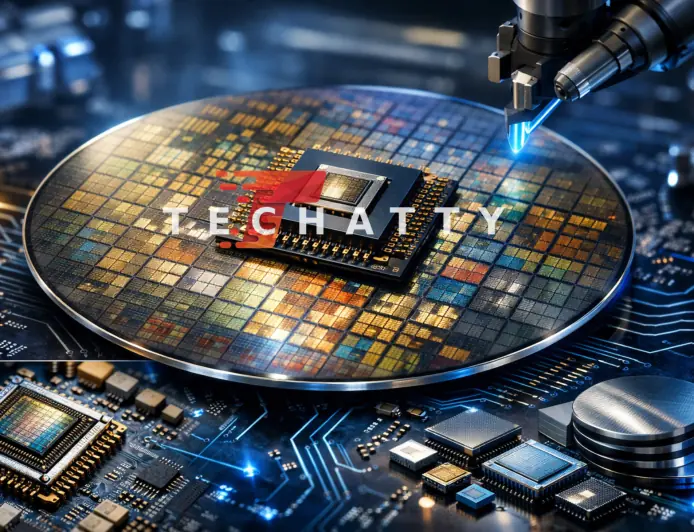


Semiconductors are the invisible infrastructure of the modern world. Every smartphone, data center, electric vehicle, satellite, medical device, and AI model depends on them. They are the “brains” of digital systems and the foundation of the global economy’s next phase.
Understanding the semiconductor industry means understanding technology, geopolitics, supply chains, and the future of global development. This article breaks down the industry from end to end—how chips are made, who controls the value chain, why the sector is so strategic, and where Africa fits into the story.
What exactly is a semiconductor?
A semiconductor is a material—usually silicon—whose electrical conductivity can be precisely controlled. This controllability allows engineers to build transistors, the tiny switches that form the basis of all digital logic.
Billions of transistors are etched onto a thin slice of silicon to form an integrated circuit (IC). These circuits power logic chips (CPUs, GPUs, AI accelerators), memory chips (DRAM, NAND flash), analog and RF chips (sensors, power management, wireless communication), and specialized chips for automotive, industrial, and IoT applications.
The industry’s progress is often measured in technology nodes (for example, 7 nm, 5 nm, 3 nm), referring to how small transistors can be made. Smaller transistors mean faster, more efficient chips.
The semiconductor value chain: A global, interdependent system
The semiconductor ecosystem is one of the most complex and globally distributed supply chains ever created. It spans design, manufacturing, equipment, materials, packaging, and end markets.
Design: Fabless and IDM models
Fabless companies design chips but outsource manufacturing to foundries. Examples include NVIDIA, AMD, Qualcomm, Broadcom, and MediaTek. Integrated Device Manufacturers (IDMs) both design and manufacture chips. Examples include Intel, Texas Instruments, Micron, and Samsung.
Manufacturing: Foundries
Foundries fabricate chips on silicon wafers using advanced lithography and chemical processes. Leading foundries include TSMC in Taiwan, Samsung in South Korea, Intel in the United States (rebuilding its foundry business), and SMIC in China, which is constrained by export controls at the leading edge.
Equipment and materials
Semiconductor manufacturing depends on highly specialized equipment and materials. ASML in the Netherlands is the only company in the world that makes extreme ultraviolet (EUV) lithography machines. Other key equipment players include Applied Materials, Lam Research, and KLA in the United States, and Tokyo Electron in Japan. These companies provide tools for deposition, etching, metrology, and inspection, along with the chemicals and gases required for chip fabrication.
Assembly, test, and packaging
After fabrication, chips are cut from the wafer, packaged, and tested. This stage, known as assembly, test, and packaging (ATP), is dominated by facilities in Taiwan, China, Malaysia, Vietnam, and the Philippines. Advanced packaging is becoming increasingly important as chiplet architectures and heterogeneous integration grow.
End markets
Semiconductors power a wide range of end markets, including AI and cloud computing, smartphones and PCs, automotive and electric vehicles, industrial automation, telecom and 5G infrastructure, and consumer electronics. Each of these sectors has its own demand patterns and technology requirements, but all rely on a steady supply of advanced chips.
Why the semiconductor industry is cyclical
The semiconductor industry experiences pronounced boom-and-bust cycles. These cycles are driven by demand fluctuations, inventory dynamics, capital expenditure waves, and technology transitions.
Demand cycles
Consumer electronics such as smartphones, PCs, and other devices see demand rise and fall with economic conditions, product refresh cycles, and technological shifts. When demand surges, chip orders spike; when it slows, the industry can quickly move into oversupply.
Inventory cycles
During periods of strong demand, companies often over-order chips to secure supply. When end demand softens, they work through existing inventory instead of placing new orders, causing a downturn for chipmakers even if long-term demand remains healthy.
Capital expenditure cycles
Building semiconductor fabs is extremely capital-intensive, often requiring investments of billions of dollars per facility. When companies invest heavily in new capacity, they can overshoot demand, leading to periods of excess supply and pricing pressure before the next wave of demand catches up.
Technology cycles
New technology nodes and architectures create waves of demand for new equipment, new designs, and new products. Transitions such as the move from 7 nm to 5 nm, or from monolithic chips to chiplet-based designs, reshape the competitive landscape and investment priorities.
Despite these cycles, the long-term trend for semiconductors is strong growth, driven by AI, electrification, connectivity, and digital transformation across industries.
The geopolitics of semiconductors
Semiconductors are now viewed as strategic national assets. Countries recognize that control over chip design, manufacturing, and supply chains influences military capability, AI leadership, economic competitiveness, and technological sovereignty.
This has led to major policy initiatives such as the U.S. CHIPS Act, the EU Chips Act, and industrial strategies in Japan, South Korea, and China. Governments are offering subsidies, tax incentives, and regulatory support to attract fabs, equipment makers, and research centers.
The global system is shifting from efficiency-driven globalization toward security-driven regionalization. Nations are seeking to reduce dependence on single points of failure, especially in regions vulnerable to geopolitical tension.
The infrastructure required to build a semiconductor hub
Creating a competitive semiconductor ecosystem requires far more than capital. It demands dense, long-term investments in physical infrastructure, human capital, industrial networks, and policy stability.
Physical infrastructure
Fabs require reliable electricity, ultra-pure water, advanced waste treatment, and highly controlled clean-room environments. They also depend on efficient logistics, including ports, airports, and road networks, to move equipment, materials, and finished products.
Human capital
A strong semiconductor ecosystem needs a large pool of engineers, technicians, materials scientists, and precision manufacturing specialists. Universities, technical institutes, and on-the-job training programs all play critical roles in building and sustaining this talent base.
Industrial ecosystem
Local suppliers of chemicals, gases, components, and maintenance services are essential. Co-located design houses, packaging facilities, and system integrators create synergies and reduce friction across the value chain.
Policy stability
Long-term, predictable policies are crucial. These include incentives for investment, strong intellectual property protection, integration into global trade networks, and a stable regulatory environment. Because semiconductor investments are long-lived, uncertainty can deter participation.
Africa’s role: From resource supplier to strategic player
Africa has been essential to the semiconductor and electronics industries for decades, primarily as a supplier of critical minerals. However, its role has largely been upstream and extractive rather than in higher-value segments such as design, fabrication, or packaging.
Africa supplies critical minerals
Several African countries provide minerals that are vital for electronics, chipmaking equipment, and energy technologies. These include cobalt and copper from the Democratic Republic of Congo and Zambia, manganese and platinum group metals from South Africa and Gabon, tantalum from Rwanda and the Democratic Republic of Congo, and rare earth elements from Tanzania, Burundi, Madagascar, and South Africa.
These materials feed into batteries, power electronics, sensors, renewable energy systems, and the equipment used to manufacture chips. Africa’s mineral base is therefore a foundational part of the broader technology ecosystem.
Why Africa is not yet a major node
When analysts describe “major nodes” in the semiconductor value chain, they typically refer to regions that dominate design, fabrication, equipment, or packaging. Africa’s current role is concentrated in raw material supply, which captures less value and visibility than midstream and downstream activities.
The opportunity ahead for Africa
Global supply chains are being reconfigured for resilience and diversification. This creates an opportunity for African countries to move up the value chain by investing in mineral refining and processing, materials for semiconductor manufacturing, assembly, test, and packaging, chip design, and mature-node fabrication for applications such as automotive, power electronics, and IoT.
Countries like Kenya, Rwanda, Nigeria, Ghana, Egypt, and South Africa are exploring partnerships with the United States, Europe, and Asia to develop capabilities in these areas. Success will depend on coordinated investments in infrastructure, education, policy, and regional integration.
The future of the semiconductor industry
The next decade in semiconductors will be shaped by AI and accelerated computing, electric vehicles and power electronics, 5G and future communication standards, edge computing, new materials such as gallium nitride and silicon carbide, and advanced packaging and chiplet architectures.
As chips become more central to every sector of the economy, the strategic importance of the semiconductor industry will only grow. Nations and regions that position themselves effectively within this ecosystem will gain significant economic and geopolitical advantages.
Conclusion
The semiconductor industry is the backbone of the digital age. It is technologically complex, economically massive, and geopolitically strategic. While Africa has historically been positioned as a supplier of raw materials, the global shift toward diversified and resilient supply chains creates a rare opportunity for the continent to move into higher-value segments of the industry.
The countries that invest early in talent, infrastructure, and strategic partnerships will shape the next chapter of the global semiconductor landscape and determine how much of the value created by this critical industry is captured locally rather than exported.
Reward this post with your reaction or TipDrop:
 Like
0
Like
0
 Dislike
0
Dislike
0
 Love
0
Love
0
 Funny
0
Funny
0
 TipDrop
0
TipDrop
0
 Sad
0
Sad
0
 Angry
0
Angry
0

We are thrilled to announce that Techatty is now part of DFECHO. We will continue keeping you informed on reliable and meaningful tech updates, great opportunities, and resources to achieve greater success. We extend our heartfelt gratitude to our global community. Your steadfast support and active engagement over the years have been the cornerstone of Techatty’s success. THANK YOU!
















Comments (0)