



Dengue Fever Travel Alert: Essential Information for Travelers Visiting High-Risk Destinations
Learn dengue symptoms, prevention tips, and travel risks for Colombia, Vietnam, Maldives, Panama, Ecuador, and other high-risk tropical and subtropical destinations.

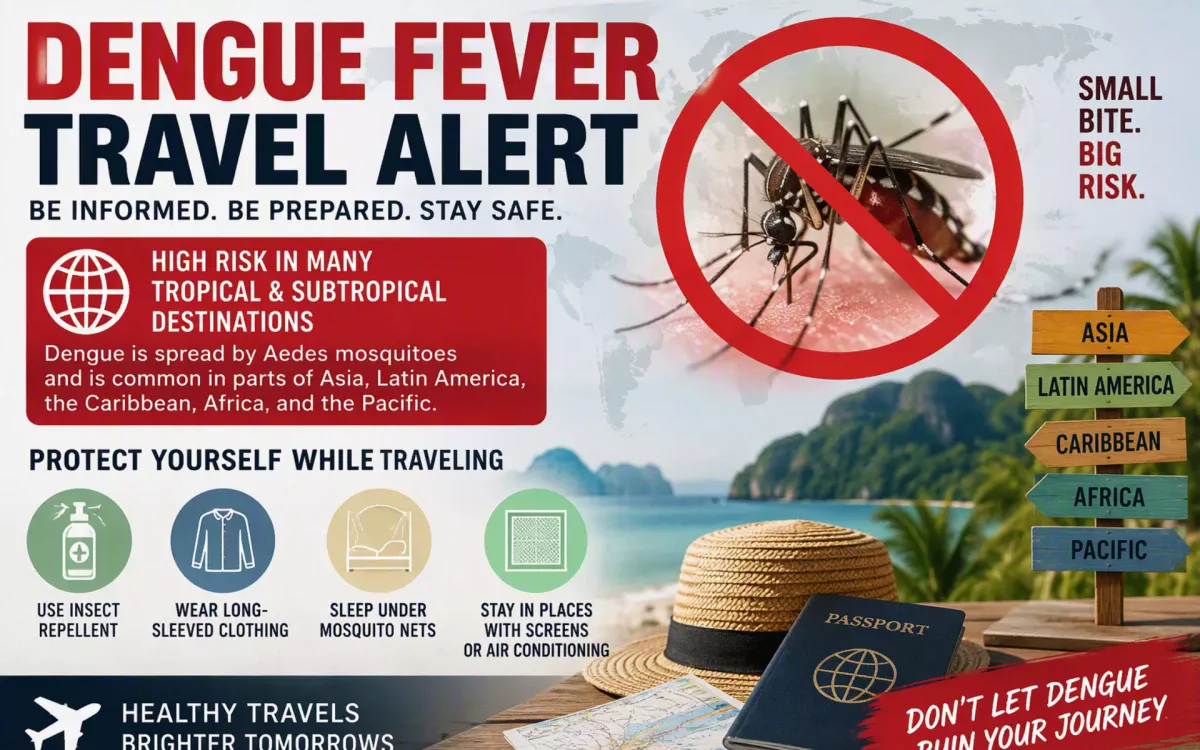


Dengue fever remains one of the world's most significant mosquito-borne diseases, affecting millions of people each year across tropical and subtropical regions. For international travelers, understanding the risks and taking preventive measures is essential, especially when visiting destinations experiencing increased dengue activity.
According to public health authorities, dengue is a year-round risk in many parts of the world, with outbreaks commonly occurring every 2 to 5 years. Travelers to affected regions are advised to take proactive steps to prevent mosquito bites and reduce their risk of infection.
What Is Dengue Fever?
Dengue is a viral disease caused by the dengue virus (DENV), which is transmitted to humans through the bites of infected Aedes mosquitoes, primarily Aedes aegypti and Aedes albopictus. Dengue is found throughout tropical and subtropical climates and continues to be a major public health concern worldwide.
While many infections are mild or even symptom-free, dengue can develop into severe dengue, a potentially life-threatening condition that requires immediate medical attention.
Countries of Increased Dengue Concern
Travelers should take extra precautions when visiting countries that are reporting higher-than-usual dengue activity or where dengue transmission remains a significant public health concern.
Countries Included in Current Dengue Risk Advisories
- Colombia
- Vietnam
- Maldives
- Bolivia
- Cambodia
- Kenya
- Malaysia
- Sri Lanka
- Bangladesh
- Costa Rica
- Marshall Islands
- Vanuatu
- Cuba
- Ecuador, including the Galápagos Islands
- Panama
Several of these countries have reported elevated dengue activity in recent years, prompting health authorities to remind travelers to practice strict mosquito bite prevention measures.
How Dengue Spreads
Unlike many other infectious diseases, dengue does not spread directly from person to person. Instead, transmission occurs when an infected mosquito bites an infected individual and later bites another person.
The mosquitoes responsible for spreading dengue are most active during daylight hours, particularly in the early morning and late afternoon. However, bites can occur at any time during the day and even around dusk.
Common Symptoms of Dengue
Symptoms generally develop several days after a person is bitten by an infected mosquito. Common symptoms include:
- High fever
- Severe headache
- Pain behind the eyes
- Muscle and joint pain
- Body aches
- Nausea
- Vomiting
- Skin rash
- Fatigue
Many individuals recover within one to two weeks. However, symptoms should never be ignored, particularly after travel to a dengue-risk area.
Warning Signs of Severe Dengue
In some cases, dengue progresses to severe dengue, which can become life-threatening within a short period. Warning signs include:
- Severe abdominal pain
- Persistent vomiting
- Bleeding gums or nose
- Blood in vomit or stool
- Difficulty breathing
- Extreme weakness
- Restlessness
- Signs of shock
Anyone experiencing these symptoms should seek urgent medical care immediately.
Why Travelers Need to Be Vigilant
International travel plays a significant role in dengue transmission patterns. Travelers may become infected during their trip and only develop symptoms after returning home. Health experts emphasize that even individuals staying at high-end resorts, urban centers, or popular tourist destinations can be exposed because dengue-carrying mosquitoes thrive in populated environments.
Destinations such as Colombia, Vietnam, the Maldives, Costa Rica, Panama, and Ecuador's Galápagos Islands continue to attract millions of visitors annually, making awareness and prevention especially important.
How to Prevent Dengue During Travel
Since there is no widely available dengue vaccine for most travelers, mosquito bite prevention remains the most effective form of protection.
Use Insect Repellent
Apply an insect repellent to exposed skin and follow product instructions carefully. Effective active ingredients include:
- DEET
- Picaridin
- Oil of Lemon Eucalyptus
- PMD
- 2-Undecanone
Wear Protective Clothing
When outdoors:
- Wear long-sleeved shirts
- Wear long pants
- Choose loose-fitting clothing when possible
- Cover exposed skin during peak mosquito activity periods
Choose Protected Accommodations
Whenever possible:
- Stay in air-conditioned rooms
- Use lodging with screened windows and doors
- Sleep under mosquito nets if screened accommodations are unavailable
Eliminate Mosquito Breeding Sites
Mosquitoes breed in standing water. Travelers and residents should help reduce breeding areas by removing or covering containers that collect water.
Before You Travel
Health authorities recommend planning ahead:
- Review country-specific travel health advisories.
- Consult a healthcare provider or travel clinic before departure.
- Pack insect repellent and protective clothing.
- Familiarize yourself with dengue symptoms and emergency warning signs.
After Returning Home
Travelers who visit dengue-risk destinations should continue monitoring their health after returning home.
If fever, rash, severe headache, or unexplained body aches develop within two weeks of travel, seek medical attention and inform your healthcare provider about your recent destinations. Travelers are also advised to continue preventing mosquito bites for several weeks after returning if they may have been exposed.
Final Thoughts
Dengue fever is a year-round threat across many tropical and subtropical destinations, including Colombia, Vietnam, Maldives, Bolivia, Cambodia, Kenya, Malaysia, Sri Lanka, Bangladesh, Costa Rica, Marshall Islands, Vanuatu, Cuba, Ecuador (including the Galápagos Islands), and Panama.
While the disease can range from mild to severe, the majority of infections can be prevented through simple mosquito bite precautions. Whether you are traveling for business, leisure, adventure, or cultural exploration, taking preventive measures before and during your trip can significantly reduce your risk and help ensure a safe, enjoyable travel experience. Staying informed, staying protected, and taking mosquito prevention seriously are the best defenses against dengue.
Frequently Asked Questions (FAQ)
Reward this post with your reaction or TipDrop:
 Like
0
Like
0
 Dislike
0
Dislike
0
 Love
0
Love
0
 Funny
0
Funny
0
 TipDrop
0
TipDrop
0
 Sad
0
Sad
0
 Angry
0
Angry
0
















Comments (0)