



NASA Awards Intuitive Machines $180.4 Million to Deliver Artemis Science and Technology to the Moon
NASA awards Intuitive Machines of Houston $180.4M to deliver Artemis science and tech to the Moon, advancing lunar exploration, research, and future human missions.
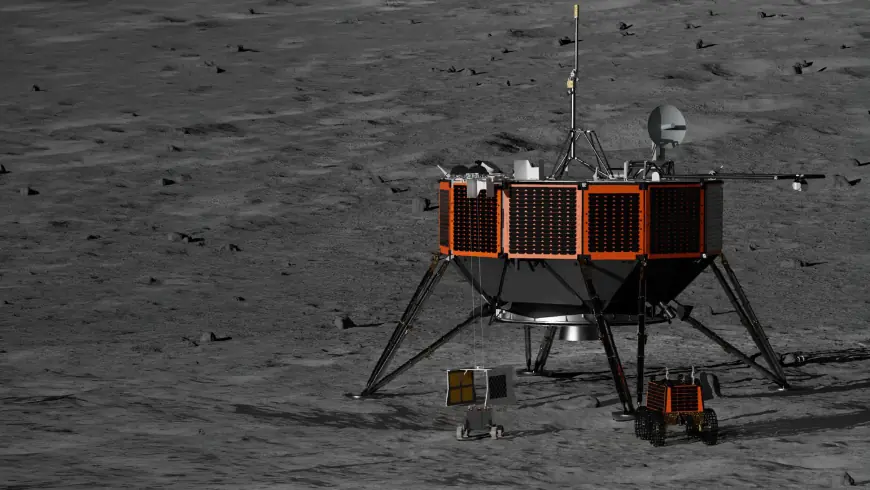


NASA’s $180.4 million contract with Intuitive Machines marks a major expansion of commercial lunar exploration under the Artemis program. The mission, designated IM‑5, will deliver seven advanced science and technology payloads to the Moon’s South Pole region using the company’s Nova‑D cargo‑class lunar lander. This effort strengthens the scientific, technological, and infrastructural foundation for future human missions.
NASA’s $180.4M Contract and Its Significance
A major step in commercial lunar exploration
NASA selected Intuitive Machines of Houston to deliver a suite of scientific instruments and technology demonstrations to Mons Malapert, a strategically valuable region near the lunar South Pole. This award represents the company’s fifth Commercial Lunar Payload Services (CLPS) task order and the first to use the larger Nova‑D lander, capable of carrying heavier payloads and supporting extended surface operations.
What the IM‑5 Mission Will Deliver
A diverse suite of science and technology payloads
The mission will deliver approximately 165 pounds (75 kg) of instruments designed to deepen scientific understanding of the lunar environment and support future Artemis missions. Key payloads include:
- SCALPSS (Stereo Cameras for Lunar Plume Surface Studies) — Captures high‑resolution imagery of regolith disturbances caused by lander exhaust.
- NIRVSS (Near‑Infrared Volatiles Spectrometer System) — Analyzes reflected light to identify minerals and potential ice deposits.
- MSolo (Mass Spectrometer for Observing Lunar Operations) — Measures volatile compounds in the lunar exosphere.
- LVRaD (Lunar Vehicle Radiation Dosimeter) — Monitors radiation levels to inform astronaut safety.
- MNP (Multifunctional Nanosensor Platform) — Studies chemical interactions and plume‑surface effects.
- LRA (Laser Retroreflector Array) — Provides passive navigation and geolocation reference points.
- Sanctuary — A time‑capsule‑style archive preserving human achievements.
The mission will also deliver two international rovers:
- An Australian Space Agency rover known as Roo‑Ver
- A rover from Honeybee Robotics, part of Blue Origin
Why Mons Malapert Is a Strategic Landing Site
A prime location for future lunar infrastructure
Mons Malapert offers several advantages that make it ideal for long‑term lunar operations:
- Continuous visibility of Earth for communications
- Stable illumination that reduces power challenges
- Proximity to permanently shadowed regions that may contain water ice
- Terrain suitable for navigation and future infrastructure
These features make the region a strong candidate for future Artemis base camps and logistics hubs.
How the Mission Supports NASA’s Artemis Strategy
Building the foundation for sustained lunar presence
The IM‑5 mission supports several key Artemis objectives:
- Increasing mission frequency through commercial partnerships
- Reducing costs compared to traditional NASA‑built spacecraft
- Expanding scientific return with frequent robotic deliveries
- Characterizing radiation, volatiles, and surface conditions for crewed missions
- Developing cislunar infrastructure for communications and navigation
These efforts help prepare for a sustained human presence on the Moon and future crewed missions to Mars.
Intuitive Machines’ Expanding Role in Lunar Exploration
A growing commercial partner for NASA
Intuitive Machines has rapidly become a key contributor to NASA’s lunar ambitions. Its recent missions include:
- IM‑1: First commercial spacecraft to land and operate on the Moon
- IM‑2: Achieved the southernmost lunar landing to date
- IM‑3 & IM‑4: Upcoming missions delivering international payloads
- IM‑5: First use of the Nova‑D cargo‑class lander
The company is also developing a Space Data Network to support persistent lunar connectivity, an essential capability for future Artemis operations.
Broader Implications for the Space Industry
A boost for commercial lunar services
The award signals continued confidence in commercial lunar transportation and infrastructure. It also highlights increasing private‑sector investment in cislunar space and a competitive landscape among CLPS providers, including SpaceX, Blue Origin, and Astrobotic.
Looking Ahead
A pivotal step toward a sustainable lunar economy
The IM‑5 mission blends scientific discovery with commercial capability, shaping how humans will explore, inhabit, and utilize the Moon in the coming decades. Its success will influence the pace and direction of Artemis and the broader future of lunar exploration.
Reward this post with your reaction or TipDrop:
 Like
0
Like
0
 Dislike
0
Dislike
0
 Love
0
Love
0
 Funny
0
Funny
0
 TipDrop
0
TipDrop
0
 Sad
0
Sad
0
 Angry
0
Angry
0

The National Aeronautics and Space Administration is America’s civil space program and the global leader in space exploration. The agency has a diverse workforce of just under 18,000 civil servants, and works with many more U.S. contractors, academia, and international and commercial partners to explore, discover, and expand knowledge for the benefit of humanity.














Comments (0)