



All You Need to Know About Obatala, Father of Humanity and the Divine Spiral on Your Fingers
Obàtálá, Òrìṣàńlá (“Great Orisha”), is the father of humanity. As humans, we all carry Obatala’s symbol on our fingers. The spirals in our fingerprints mirror the infinite spiral of the snail shell as a divine imprint of the Creator upon the human form.
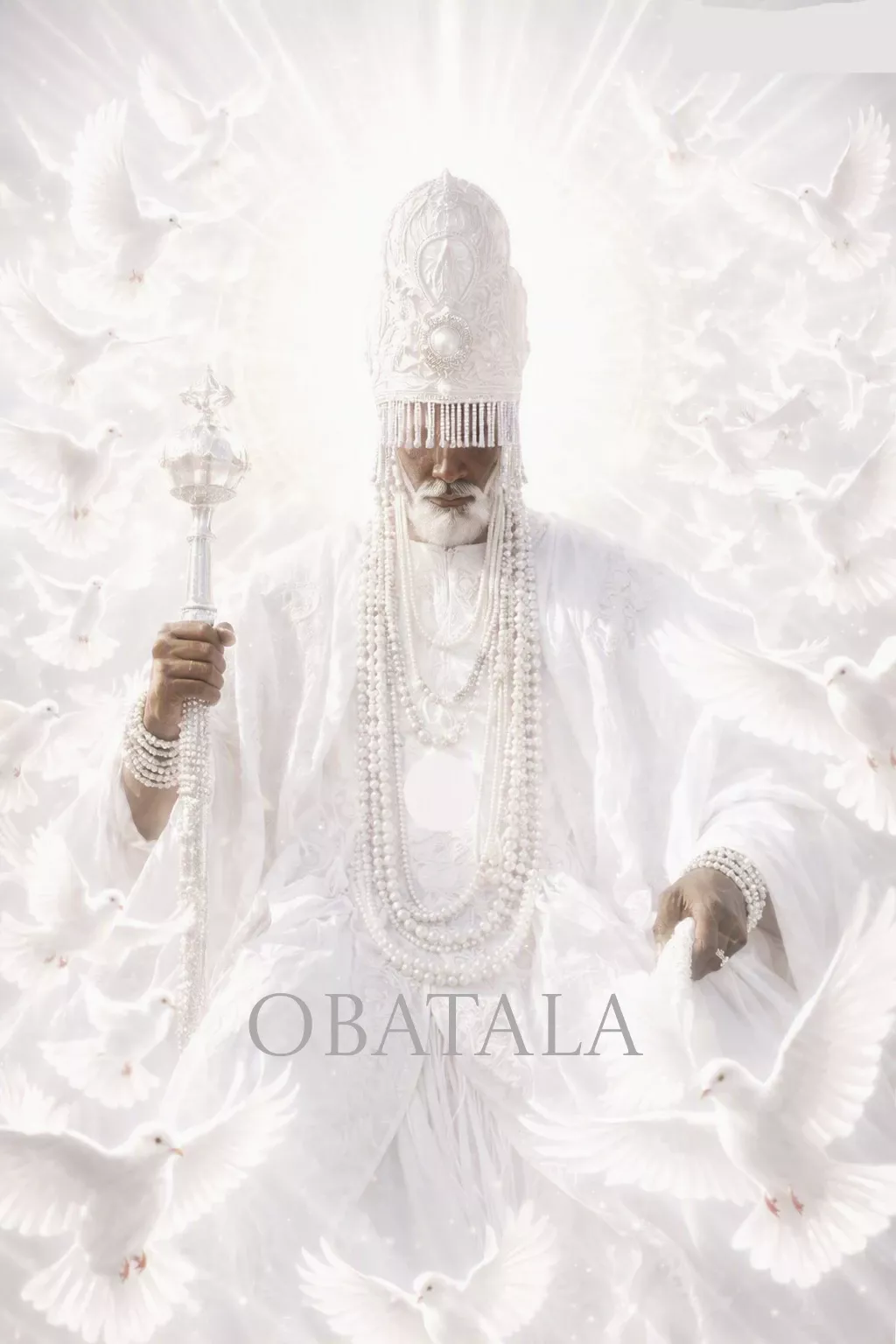


Obatala, Òrìṣàńlá (“The Great Orisha”), is the father of humanity. In Yoruba cosmology, Olódùmarè (God) entrusted him with the sacred task of molding human beings from clay, and Obàtálá imprinted his divine signature on every person. As humans, we all carry Obàtálá’s symbol on our fingers. The spirals in our fingerprints mirror the infinite spiral of the igbin (snail shell), a sacred emblem of Obàtálá that represents creation, the unfolding of life, and the divine imprint of the Creator upon the human form.
His essence is purity, fairness, and wisdom. Today, Obàtálá remains a beacon for those seeking justice, clarity, and spiritual empowerment, reminding us that divinity lives within our very skin.
Historical Background
Obàtálá’s cosmological role is profound: he was the first Orisha to descend from heaven with a sacred staff, to create dry land, and was entrusted by Olódùmarè (God) with the divine task of molding human beings from clay.
Every human fingerprint carries his mark — the spiral whorls on our fingertips mirror the sacred spiral of the igbin (snail shell), a symbol of creation and infinity. This spiral represents the unfolding of life, continuity, and the Creator’s imprint on the human form.
- Fingerprints: The divine spiral inscribed on human fingers is Obàtálá’s eternal reminder that we are his children.
- Snail Shell: Sacred to Obàtálá, the snail embodies patience, wisdom, and the slow unfolding of creation.
- Cosmological Meaning: The spiral is infinity itself — the eternal cycle of life, justice, and balance.
In pre-colonial Yoruba society, Obàtálá was revered as the arbiter of justice and fairness, consulted in disputes and honored as the embodiment of moral clarity. His shrines were centers of ethical authority, and his priests upheld the values of truth and impartiality.
Attributes & Symbols
- Colors: White — purity, peace, clarity.
- Tools: Staff of authority, white cloth, silver ornaments.
- Offerings: White doves, White foods — rice, coconut, milk, kola nuts, snail.
- Chants: Praise songs invoke his fairness and wisdom, reminding humanity of his creative role.
- Ethical Meaning: His whiteness symbolizes justice, humility, and incorruptibility.
Festivals & Days
- Òsé Obàtálá: A sacred day of worship held every four days in the Yoruba calendar. Devotees honor Obàtálá with prayers, offerings of white foods, and rituals of purity. It is a recurring cycle of devotion, reaffirming his role as father of humanity and guardian of justice.
- Odún Òbàtálá: Celebrated annually in January at Oyo and other Yoruba towns. Devotees dress in white, offer white foods, and engage in drumming, dancing, and hymns of purity. The festival emphasizes justice, humility, and the creative power of Obàtálá.
- Ìṣẹ̀ṣé Day: Observed on August 20th, is a yearly pan-Orisha festival where Obàtálá is honored alongside all other Orishas, reaffirming Yoruba identity.
- Diaspora Adaptations: In Cuba (Santería), Brazil (Candomblé), and Haiti (Vodou), Obàtálá’s festivals blend Yoruba rituals with Catholic imagery, preserving his essence across oceans.
Colonial Power & Suppression
Colonial missionaries sought to erase Obàtálá’s worship, branding it “pagan.” Shrines were destroyed, and festivals banned. Devotees resisted through syncretism: Obàtálá was hidden under Catholic figures like Our Lady of Mercy. Festivals became acts of defiance, preserving Yoruba spirituality under colonial surveillance.
Advantages for Devotees
You will receive the highest protection. No power, authority, or principality can touch you.
- Spiritual: Guidance in justice, purity, and ethical living. For devotees of Obàtálá, if your deeds are clean and your heart is pure, you receive the highest protection. No power, authority, or principality can touch you — including Àwon Ìyá mi Òṣòròngà (the mystical mothers).
- Psychological: Peace, clarity, resilience against oppression. Obàtálá’s purity brings calmness of mind and strength to endure trials.
- Communal: Strengthens identity, solidarity, and cultural pride. His worship unites communities in justice and fairness.
In the era of the transatlantic slave trade, Obàtálá offered enslaved Africans a spiritual anchor, sustaining their dignity and hope. Today, he continues to empower devotees who walk in purity, for his protection is absolute: no power, authority, or principality can touch the righteous — not even Àwon Ìyá mi Òṣòròngà (the mystical mothers). Divine justice shields those who remain clean in their deeds, affirming Obàtálá’s eternal guardianship.
Diaspora resilience
- Santería (Cuba): Obàtálá syncretized with Our Lady of Mercy, honored with white-clad rituals.
- Candomblé (Brazil): Known as Oxalá, celebrated with white foods, drumming, and processions.
- Vodou (Haiti): His essence merged with Fon and Kongo traditions, symbolizing purity and justice.
These adaptations ensured Yoruba cosmology survived slavery and colonial erasure, thriving in new lands.
Educational Critique
Colonial education erased African cosmologies, branding them primitive. Schools silenced Yoruba wisdom, teaching European religion and history instead. It is important to restore erased knowledge, presenting Obàtálá not as myth but as a living philosophy of justice, purity, and resilience.
Associated Odù Ifá
Obàtálá is linked to Odù Òfún Méjì, which emphasizes purity, humility, and justice. These verses warn against arrogance and corruption, reinforcing Obàtálá’s authority as the guardian of fairness and balance.
Back to the roots
To honor Obàtálá is to reclaim Yoruba identity and resist colonial erasure. Study his myths, recognize his spiral in your fingerprints, offer white foods, wear white in his festivals, and participate in Ìṣẹ̀ṣé celebrations. By doing so, devotees engage in cultural reclamation and spiritual empowerment, affirming that the father of humanity still guides us today.
Obàtálá is not only an Orisha but the living imprint of creation
Obàtálá is not only an Orisha but the living imprint of creation itself. His spiral is etched into our fingertips, his justice guides our communities, and his resilience inspires cultural survival. To honor him is to honor humanity, justice, and the eternal unfolding of life.
Reward this post with your reaction or TipDrop:
 Like
0
 Dislike
0
 Love
0
 Funny
0
 TipDrop
0
 Sad
0
 Angry
0

Divine3 – Bridging the Past, Present, and Future! We guide and support seekers toward trustworthy solutions for both spiritual and health challenges, rooted in the rich Yoruba heritage. As the pillar of history, culture, and ancestral wisdom, Divine3 is destined to promote Isese (Ìṣẹ̀ṣe) and bridge the raw African power and timeless ancestral wisdom with the world — connecting seekers to divine healing, spirituality, culture, and trusted Bàbáláwo, Ìyánífá, Ìyálòrìṣà, Astrologers, and Traditional Healers who speak your language. Every service is delivered with security, guarantee, and convenience through Dfecho's Workspace and its DIP secured payment system. Begin your journey with a Remote Ifá consultation at just $25.













Comments (0)