



The U.S.–Iran War: A Story of Conflict, Crisis, and Fragile Peace
U.S.–Iran war reshaped global energy, caused humanitarian crises, and sparked fragile peace talks with lasting geopolitical consequences.
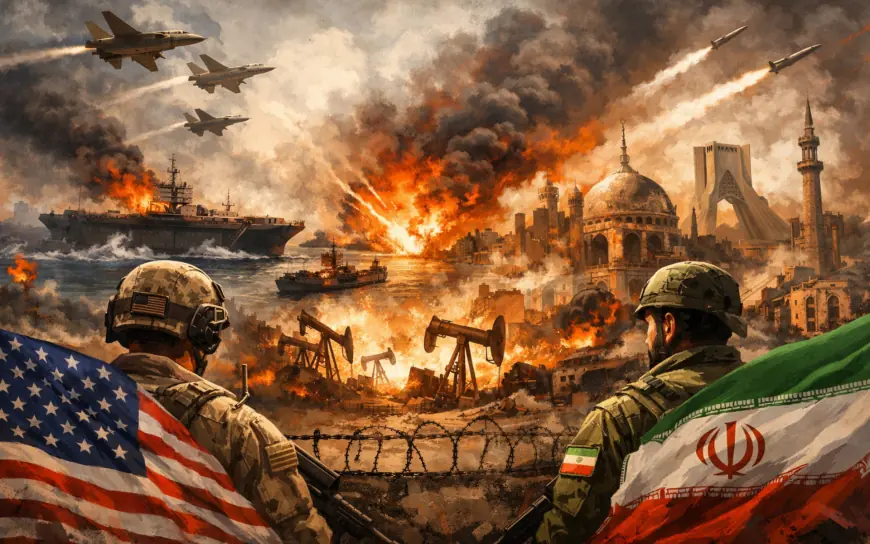


For decades, tensions between the United States and Iran simmered beneath the surface. From the 1979 Iranian Revolution to the U.S. withdrawal from the nuclear deal in 2018, mistrust defined relations. The Strait of Hormuz — a narrow waterway through which one-fifth of the world’s oil passes — became the symbolic and strategic fault line.
By early 2026, escalating proxy clashes in Lebanon and the Gulf spiraled into direct confrontation. What began as targeted strikes quickly expanded into a full-scale war, drawing in Israel, Hezbollah, and regional powers.
The War Unfolds
The war opened with devastating strikes on Iran’s leadership, including the death of Supreme Leader Ayatollah Ali Khamenei. Iran retaliated with missile attacks on U.S. bases and naval forces, exposing vulnerabilities in American maritime security.
- Iran’s suffering: Thousands killed, millions displaced, and critical infrastructure destroyed.
- U.S. challenges: Casualties among soldiers, political backlash at home, and strained alliances abroad.
- Regional chaos: Lebanon bore the brunt of Israeli offensives, while Syria and Afghanistan absorbed waves of displaced civilians.
This was not a war of clear battle lines but of proxy clashes, economic strangulation, and global reverberations.
Energy Shock
The closure of the Strait of Hormuz sent shockwaves across the globe. Oil prices surged past $100/barrel, triggering inflation in Europe, fuel rationing in Asia, and fertilizer shortages in Africa.
- Winners: U.S. energy firms and Russia profited from higher revenues.
- Losers: Import-dependent economies faced crippling shortages.
- Lesson: The war underscored how a single chokepoint can destabilize the entire global economy.
Humanitarian Toll
The human cost was staggering:
- Iran: Over 2,100 civilians killed, 27,900 injured, and millions displaced.
- Lebanon: More than 1 million displaced, with food insecurity affecting one in four people.
- Regional effects: Environmental damage from burning oil depots, collapsing health systems, and mass migration.
The war highlighted the fragility of civilian life in modern conflict, where infrastructure becomes both a target and a casualty.
Diplomatic Fallout
Diplomacy shifted dramatically:
- Iran’s gains: Sanctions relief, asset recovery, and resumed oil sales.
- U.S. isolation: European allies refused to join the war, questioning Washington’s credibility.
- New mediators: Pakistan and Qatar emerged as unexpected peacemakers, brokering talks in Switzerland.
- Fragile ceasefire: A 60‑day roadmap toward peace was signed, but violations in Lebanon and threats over Hormuz keep the truce unstable.
Educational Takeaways
This war offers timeless lessons about geopolitics:
- Energy dependence: Global reliance on chokepoints like Hormuz makes economies vulnerable.
- Humanitarian fragility: Civilian infrastructure is often the first casualty in modern wars.
- Diplomatic shifts: Smaller states like Pakistan and Qatar can play outsized roles in mediation.
- Limits of power: Military strength does not guarantee political victory or global legitimacy.
Outlook
The war has left no clear winner. Iran remains battered but resilient, the U.S. politically strained, and the world facing prolonged instability. The ceasefire may evolve into a lasting peace — or collapse into renewed conflict.
In the end, the U.S.–Iran war is not just about two nations. It is a story of how local conflicts ripple across the globe, reshaping energy markets, humanitarian priorities, and diplomatic alignments.
Let’s Be Partners
- We offer a wide range of professional virtual assistance services, including business writing.
- We also connect people with reliable African spiritual doctors and natural‑remedy healers for life’s challenges, all through the secure Dfecho Workspace with its integrated DIP Payment system.
- We are open to sponsorships, mentions, and backlinks in our articles.
- Contact us anytime or request an obligation‑free quote.
- Transact with us as a Vetted Pro on Dfecho.
Follow. Like. Comment anonymously — we’d love to hear from you. And if you love this post and want to show your support, we’d appreciate your TipDrop—whether publicly in the comment section, or through our TipDrop Page. Thank You!

Reward this post with your reaction or TipDrop:
 Like
0
Like
0
 Dislike
0
Dislike
0
 Love
0
Love
0
 Funny
0
Funny
0
 TipDrop
0
TipDrop
0
 Sad
0
Sad
0
 Angry
0
Angry
0

Africa & The World: A space for a panoramic view of the African continent and beyond—because Africa’s story is inseparable from the world’s story. Our mission is to inform, inspire, and engage, while correcting misrepresentations and highlighting Africa’s impact on the global stage. We spotlight the continent’s diverse voices, cultures, politics, innovations, alliances, and everyday life, bringing authentic perspectives to the forefront of global conversations.













Comments (0)